
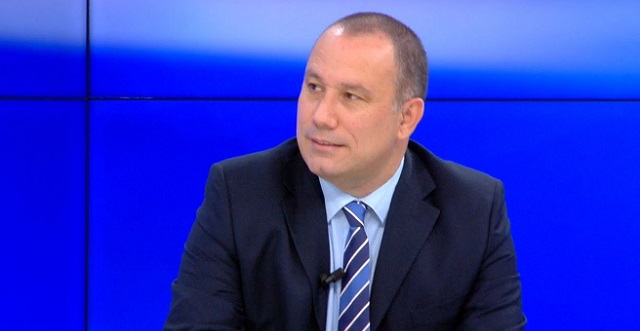
By Dr. Dritan Hoti
In the long arc of European statecraft, moments arise when the imperatives of power collide with the necessities of moderation. Such moments illuminate whether leaders remain prisoners of ideological dogma or evolve into practitioners of pragmatic diplomacy.
Today, as the debate intensifies around a prospective peace plan for Ukraine—one that would formalize Russian control over currently occupied territories, guarantee the security of what remains of Ukraine, and place broader European security under American stewardship—the question looms: Could Vladimir Putin shift from an ideologized posture toward a realist diplomatic settlement? Or has the Russian leadership traveled too far down the path of geopolitical absolutism to retreat toward compromise?
To contextualize this dilemma, one must recall Bismarck, that architect of continental equilibrium whose ambitions contained both iron and restraint. His enterprise, though rooted in military triumph, sought to fulfill a clearly defined national project: the unification of Germany. Yet once that objective was achieved, Bismarck tempered force with moderation, understanding that the preservation of a newly consolidated state required stability rather than perpetual expansion. His Realpolitik, often misunderstood as mere cynicism, in truth represented a deep appreciation for the limits of power.
Russia, by contrast, enters the Ukrainian conflict not in pursuit of a territorial project akin to nineteenth-century nation-building. As a vast Euro-Asian empire—the world’s largest state by landmass—Russia does not lack for space, population distribution, or resources. Its objectives are therefore not territorial in the classical sense. Instead, the Kremlin seeks the construction of a geopolitical pole: a center of military, cultural, and ideological gravity capable of influencing not only the European order but select dimensions of the global system. In this sense, the war in Ukraine is less about land and more about Russia’s self-perception as a civilizational force whose legitimacy the West, in Moscow’s view, has persistently denied.
The proposed peace plan—including its twenty-eight points, which encompass territorial concessions, demilitarized zones, security guarantees for Kyiv, and a renewed American commitment to European defense—would represent a dramatic restructuring of the post-Cold War settlement. Under such an arrangement, Russia’s annexed regions would receive de facto recognition. Ukraine would retain sovereignty over the remaining eighty percent of its territory, whose security would be backed not only by European states but decisively by the United States. It would signify, in symbolic form, a return to 1945—when Washington assumed responsibility for Europe’s security architecture—though the historical context differs profoundly.
Russia today is not the Soviet Union of 1945. It lacks the ideological universalism of Bolshevism and the economic-industrial capacity that once underpinned Soviet power. Europe, meanwhile, is neither exhausted by world war nor vulnerable to continental domination. It is integrated, wealthy, technologically advanced, and embedded within the transatlantic system. Thus the acceptance of this peace plan would not reconstruct the conditions of the mid-twentieth century; rather, it would constitute a negotiated settlement crafted in an era where power is distributed across multiple centers, and where the global balance is influenced as much by emerging digital, economic, and energy systems as by territorial conquest.
This raises an essential question: Could Putin—whose diplomacy has been intertwined with ideological narratives of civilizational destiny, historical grievance, and anti-Western defiance—transition toward a pragmatic, realist diplomatic posture? Could he accept a settlement that ends the war without delivering a decisive victory, yet allows him to present the outcome as a national triumph?
There are reasons to doubt such a shift. The Kremlin’s rhetoric has hardened into a worldview that interprets Western actions not as policy differences but as existential threats. Such an ideological frame reduces the space for compromise and incentivizes maximalist positions. Moreover, the Russian nationalist elite—emboldened by years of state propaganda and mobilization—may interpret any settlement short of complete capitulation by Ukraine and its allies as a strategic setback.
Nevertheless, power politics often produces paradoxical outcomes. States sometimes accept agreements under duress, later reframing them as victories. The acceptance of the twenty-eight-point plan, despite the real difficulties Russia faces in securing a definitive military victory, could be heralded domestically as a triumph: a confirmation that Russia reshaped borders by force and compelled the West to acknowledge its influence. For Putin, who has anchored his legitimacy in the language of restored national greatness, such an outcome could be narratively framed as the culmination of a historic mission.
Should such a settlement take hold, Europe would enter a new strategic phase. A frozen conflict resolved through formal concessions would not pacify the continent; rather, it would accelerate the militarization of Europe’s historic powers. The northern arc of the continent—especially Poland, the Baltic states, and the Scandinavian region—would intensify their defense spending, perceiving Russia’s gains as evidence of Western vulnerability rather than diplomatic success. Germany, grappling with its post-Cold War identity, would likely expedite the transformation of its armed forces, moving toward a more assertive strategic role. France and the United Kingdom, long the custodians of Europe’s military tradition, would expand their capabilities to ensure that Europe does not remain dependent on American security guarantees alone.
This renewed emphasis on military power would reshape European diplomacy. The continent, which for decades aspired to transcend geopolitics through economic and normative integration, would rediscover itself as a generator of history—a familiar but unsettling role.
The transformation would not be instantaneous, but it would be profound. Where Europe once exported institutions and values, it would once again export strategic consequences. In this environment, the United States would face both an opportunity and a burden. By guaranteeing the security of Ukraine’s remaining territory and reinforcing NATO’s northern and eastern flanks, Washington would regain its position as Europe’s indispensable arbiter. Yet this role would unfold amid global commitments that differ from those of 1945: competition with China, instability in the Indo-Pacific, and the necessity of maintaining technological and economic leadership. A commitment to European security, though strategically essential, would further stretch American resources in an era defined by multipolar complexity.
For Russia, the acceptance of the peace plan would mark a choice between two futures. In one, it doubles down on ideological projection—using the settlement as evidence of imperial resilience, seeking to deepen partnerships with states dissatisfied with Western hegemony, and continuing to present itself as an alternative civilizational model. In the other, it pivots toward a quieter, more calculable grand strategy: stabilizing its western frontier, consolidating influence in Eurasia, and engaging in selective cooperation with the West where interests converge. History suggests that ideological states rarely abandon doctrine voluntarily. But it also teaches that even the most doctrinaire systems eventually bend to the pressures of reality.
The question is whether Russia, under its current leadership, sees moderation as a form of weakness or as a necessary tactic for achieving long-term strategic endurance. Europe, for its part, must prepare for a continent reordered not by aspiration but by power. If the peace plan is accepted, the continent will face a paradoxical situation: a war concluded through compromise yet followed by greater militarization; a settlement that reduces immediate conflict yet amplifies long-term strategic rivalry.
The return of the geopolitical Europe—the Europe of armies, alliances, and strategic calculations—will challenge the liberal assumptions that have guided the European project since 1991. In this new landscape, diplomacy must regain the sophistication that characterized the era of Bismarck and later the strategic thinking of statesmen like Henry Kissinger. It must balance firmness with prudence, recognizing that peace is rarely the product of moral clarity alone but of the careful management of competing interests. If the peace plan is accepted, the responsibility will fall on Europe and the United States to ensure that the settlement does not simply freeze conflict but lays the groundwork for sustainable stability. And it will fall on Russia to decide whether it seeks recognition through confrontation or influence through constructive engagement.
The acceptance of peace will not in itself resolve the deeper ideological fissures between Russia and the West. But it may, at the very least, create a moment—however fragile—for diplomacy to reclaim its place alongside force in shaping the destiny of Europe.
