
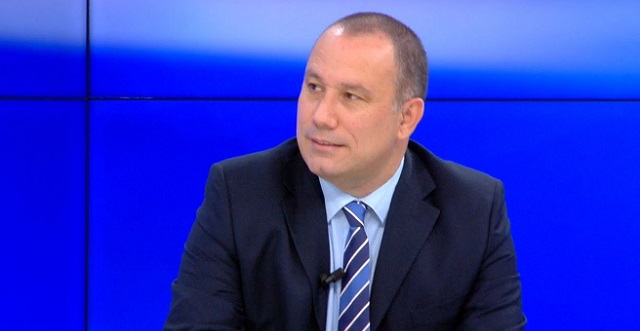
By Dr. Dritan Hoti*
The evolution of France’s attitude toward Serbia offers a revealing case study in the dialectic between historical memory and raison d’état. Across more than a century, French policy has oscillated between romantic solidarity, strategic instrumentalization, moral disillusionment, and contemporary pragmatism. To understand this trajectory is to apprehend how a former great power, shaped by Cartesian rationality and a deep historical consciousness, recalibrates its alignments as the geometry of Europe shifts.
The Origins of French Serbophilia: Moral Sentiment and Strategic Design
French Serbophilia emerged in the late nineteenth century at the intersection of humanitarian rhetoric and geopolitical calculation. The public discourse of Victor Hugo, notably his address “Pour la Serbie”, constituted a powerful moral plea—a plaidoyer on behalf of a small nation perceived as oppressed. In the French imagination, Serbia came to symbolize both heroic resistance and the dignity of national self-determination.
Yet sentiment alone does not explain durable alignments. In the analytical spirit later articulated by Raymond Aron, alliances are rarely the offspring of emotion; they are the expression of convergent interests within an anarchic international system. For France, confronted with the strategic weight of the Habsburg Monarchy in Southeastern Europe and the enduring challenge of German power, Serbia represented a valuable counterweight. The promotion of South Slav unity functioned not merely as an idealistic endorsement of national emancipation, but as an instrument to constrain Vienna and, by extension, to complicate the balance of power in Central Europe.
Thus, French Serbophilia was less a spontaneous affection than a structured orientation—an early illustration of how moral vocabulary can be harmonized with strategic intent.
The First World War and the Institutionalization of Alliance
The First World War solidified Franco-Serbian ties in both symbolic and institutional terms. Military cooperation on the Salonika front, culminating in decisive operations against the Central Powers, elevated the relationship to the level of shared sacrifice. The figure of General Louis Franchet d’Espèrey, later proclaimed Vojvode of Yugoslavia, embodied this fusion of martial success and political symbolism. His elevation was not a mere ceremonial gesture; it signified France’s investment in the postwar South Slav state as a pillar of the emerging European order.
In the interwar period, France sought to construct a security architecture designed to contain any resurgence of German power. The Kingdom of Serbs, Croats and Slovenes—later Yugoslavia—became an essential component of this “cordon sanitaire.” Here again, the logic was unmistakably strategic: by weaving a network of alliances in Eastern and Southeastern Europe, France aimed to encircle Germany and preserve the fragile equilibrium established at Versailles.
This approach reflected a distinctly French intellectual formation. The Cartesian tradition—systematic, rational, and attentive to structural coherence—favored the design of an international architecture in which each state occupied a calculated position. Yugoslavia was not simply a friend; it was a structural element in a deliberate geopolitical construction.
Memory, Symbolism, and the Persistence of Narrative
Even as the geopolitical context evolved, symbolic gestures preserved the narrative of fraternity. The Monument of Gratitude to France at Kalemegdan in Belgrade, re-inaugurated in 2019 in the presence of Emmanuel Macron, stands as a material testament to this historical bond. Such acts are not politically neutral; they reaffirm a shared memory that continues to inform diplomatic tone, if not always substantive policy.
Yet symbolism cannot indefinitely override structural transformation. The disintegration of Yugoslavia in the 1990s confronted France with a moral and strategic dilemma. The brutal conduct associated with Serbian forces during the wars in Bosnia and Kosovo eroded the reservoir of goodwill that had accumulated over decades. In sociological terms, Serbia’s symbolic capital within French public opinion and elite discourse was sharply diminished.
The Post-Cold War Recalibration
French diplomacy, guided by a realist appreciation of shifting constraints, could no longer sustain unqualified support for Belgrade. The violent fragmentation of Yugoslavia demanded a redefinition of priorities. France aligned itself with broader European and transatlantic efforts to stabilize the region, even when such efforts entailed confrontation with Serbian authorities.
This recalibration did not signify a wholesale repudiation of historical ties, but rather their subordination to a revised hierarchy of interests. In a system transformed by the end of bipolarity, the preservation of European stability and normative order took precedence over inherited affinities.
Contemporary Relations: Pragmatism without Illusion
Today, Franco-Serbian relations are characterized by pragmatic cooperation rather than ideological intimacy. France remains engaged economically, notably in infrastructure, energy, and urban development projects. Cultural exchanges persist through educational and francophone networks, sustaining a moderate but tangible affinity.
At the same time, France’s broader European policy has reflected caution regarding enlargement. In 2019, Emmanuel Macron expressed skepticism about opening accession negotiations with Albania and North Macedonia, arguing that the European Union required internal reform before further expansion. This stance was widely interpreted in the Balkans as strategic hesitation.
French public opinion has displayed significant reticence toward enlargement, with surveys indicating that approximately 59 percent oppose an EU perspective for Albania. In segments of French debate, the Albanian question in the Balkans is occasionally framed as a geopolitical investment of the United States—an interpretation revealing both residual suspicion of American activism and a persistent sensitivity to balance-of-power considerations.
The Russian invasion of Ukraine, however, has altered the European strategic landscape. It has revived awareness of the necessity to anchor the Western Balkans firmly within European structures. Whether this will translate into a more assertive French endorsement of enlargement remains an open question, but the structural incentives for engagement have undoubtedly intensified.
The Endurance of Cultural Serbophilia
Despite diplomatic recalibration, strands of traditional Serbophilia endure within segments of the French intellectual and media elite. Rooted in the memory of World War I and nourished by a conservative attachment to historical alliances, these currents interpret Serbia through a lens of loyalty and perceived injustice.
An illustrative example is the recent interview granted by the French journalist Vincent Hervouet on Europe 1 in Paris. His remarks echoed, in tone and substance, the Serbophile declarations characteristic of French diplomatic and intellectual elites at the close of the First World War. Such resonances underscore the persistence of historical narratives that outlive the circumstances of their origin.
Conclusion: Between Memory and Reason of State
France’s attitude toward Serbia has evolved from romantic solidarity to strategic partnership, from disillusionment to calibrated pragmatism. This evolution reflects neither inconsistency nor caprice, but rather the continuous adjustment of policy to structural realities.
States, as a sociological insight would suggest, are not merely rational calculators; they are repositories of memory, identity, and symbolic capital. French diplomacy—disciplined by Cartesian reasoning and informed by historical consciousness—has modified its stance toward Serbia in light of new geopolitical conditions and moral constraints. Yet beneath this recalibration, traditional perceptions persist, especially among segments of the elite shaped by inherited narratives.
The Franco-Serbian relationship thus remains suspended between history and strategy. It is a testament to the enduring interplay between sentiment and interest, between collective memory and geopolitical design—a dynamic that continues to define France’s role in the evolving architecture of Europe.
The author completed a PhD dissertation in the history of international relations at the University of Vienna, Austria; an MA in Geopolitical Studies at the University of Toulouse, France; and a degree in International Relations from the University of Graz, Austria.
