
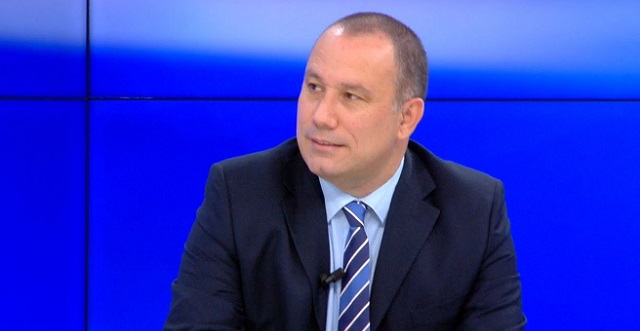
By Dr. Dritan Hoti*
The rivalry between Greece and Turkey cannot be reduced to a mere geopolitical or
geoeconomic contest of the contemporary international system. It is, rather, the manifestation of a deeper historical tension shaped by distinct conceptions of national interest and divergent trajectories of state formation. This enduring friction reflects not only disputes over maritime zones, energy resources, or military positioning, but also the legacy of historical experiences that continue to inform the strategic cultures of both nations. The creation of the modern Greek nation-state following the revolution of 1830 was grounded in an ambition that extended beyond the conventional limits of national consolidation. It implied the reassertion of Greek influence across territories once associated with the Byzantine Empire in the Eastern Mediterranean and parts of the Balkans. Such a vision, disproportionate to the material capabilities of the emerging state, carried a strong ideological character. It was perceived by some leading European statesmen as both unrealistic and destabilizing. Among them, Klemens von Metternich stood out as the principal opponent of this project, viewing it as a dangerous precedent for the balance of power in the Mediterranean. As a result, while philhellenic sentiment existed within certain European circles, Greece struggled to secure consistent maximalist support even from its sympathizers.
By contrast, the Turkish conception of national interest must be understood as an evolving construct shaped by the transition from empire to republic. The establishment of modern Turkey under Mustafa Kemal Atatürk represented a disciplined redefinition of sovereignty, identity, and territorial integrity. From a European analytical perspective, Turkey emerged as the metropolitan core of the former Ottoman Empire, reconstituted into a nation-state oriented toward stability and pragmatic statecraft. Yet, the subsequent evolution of Turkish foreign policy reveals an inherent tension between this republican inheritance and impulses that may be described as neo-imperial. Such tendencies are not unique to Turkey; they are observable in other contemporary powers seeking to reinterpret historical legacies in pursuit of present ambitions.
In Turkey’s case, these impulses are reflected in a more assertive posture in the Eastern Mediterranean and a growing inclination to revisit international agreements concluded during the twentieth century, particularly those concerning the islands of the Aegean Sea.
From Ankara’s perspective, these arrangements appear increasingly incompatible with both historical logic and Turkey’s geoeconomic interests, a perception rooted in a revisionist interpretation of history. The transformation of Turkish–Israeli relations add another layer of complexity to this evolving strategic landscape. For decades following the establishment of Israel, cooperation between Ankara and Tel Aviv was grounded in pragmatic considerations, including shared security concerns and mutual strategic utility.
However, the gradual shift in Turkish foreign policy toward a pro-Palestinian orientation—based on ideological solidarity and at times reinforced by religious rhetoric—has disrupted this equilibrium. In response, Israel has adopted a policy of balancing reciprocity, seeking alternative partnerships to compensate for the erosion of its strategic relationship with Turkey.
This recalibration has materialized in the strengthening of military and strategic ties between Israel, Greece, and Cyprus. From the standpoint of Turkish national interest, this emerging alignment lies squarely within a zone of direct concern. It has therefore provoked strong reactions from Turkish leadership.
Foreign Minister Hakan Fidan has characterized this partnership as being directed against Muslim countries, even invoking the possibility of future armed confrontation. Such statements reflect a broader perception within Ankara of strategic encirclement.
At the same time, certain voices within Israeli strategic discourse have contributed to the escalation of tensions. At the outset of American–Israeli air operations against Iran, former Prime Minister Naftali Bennett reportedly suggested that Turkey could emerge as a subsequent strategic focus. Yet such comparisons obscure fundamental differences. Unlike Iran, whose 1979 revolution represented a rupture with its historical continuity, Turkey’s trajectory reflects a more complex synthesis of tradition and pragmatism.
President Recep Tayyip Erdogan operates within a framework that combines socio-religious traditionalism, centralized authority, and tactical flexibility. His rhetoric often invokes historical and cultural themes, yet his policies reveal a careful calibration to the constraints of the international system. Crucially, Turkey does not appear to be constructing a military architecture in the Middle East designed to pose an existential threat to Israel. Rather, its strategy is oriented toward expanding its influence within the broader Muslim world and reinforcing its status as a regional power. Religious rhetoric, in this context, functions more as a tool of political mobilization than as a blueprint for systemic confrontation. The intensification of tensions among Turkey, Israel, Greece, and Cyprus has elevated the Eastern Mediterranean into a theater of strategic competition reminiscent of nineteenth-century diplomacy.
The convergence of energy exploration, maritime disputes, and military positioning has created a multidimensional arena in which alliances are fluid and interests frequently overlap. What distinguishes the present moment, however, is the configuration of these alignments within the NATO framework. For the first time, four of the five states involved in this strategic constellation—excluding Israel—are members of the same military alliance. This unprecedented situation challenges traditional assumptions about alliance cohesion and reveals the growing complexity of contemporary geopolitics. Within this context, Anglo-Saxon diplomacy, particularly that of the United States, adopts a pragmatic and measured approach. Turkey is perceived as a complex and indispensable partner embedded in multiple regional and global frameworks. This perspective reflects a recognition of Turkey’s strategic importance, as well as the necessity of maintaining engagement despite persistent disagreements. The continuation—indeed, the continuity— of structured dialogue remains a central objective of Western policy. Recent diplomatic developments illustrate this dual dynamic.
The visit of Turkish Foreign Minister Hakan Fidan to London, where he signed a strategic partnership agreement with British Foreign Secretary Yvette Cooper, underscores the persistence of engagement between Turkey and key Western actors. Yet this outreach has been accompanied by parallel efforts within Europe to reinforce counterbalancing structures. In this regard, the role of France has been particularly significant. President Emmanuel Macron has renewed and deepened France’s strategic military partnership with Greece, reaffirming Paris’s commitment to regional stability. This includes not only enhanced defense cooperation but also explicit guarantees concerning the security of Cyprus. Moreover, France has considered the possibility of extending a form of nuclear deterrence coverage to Greece in the event of an existential threat. These overlapping initiatives reflect a broader pattern: the coexistence of cooperation and competition within the same strategic environment.
Ultimately, the Eastern Mediterranean represents more than a regional dispute; it is a microcosm of the evolving international order. It illustrates the persistence of historical legacies, the interplay between ideology and pragmatism, and the limits of power in a complex and interconnected system. The resolution of these tensions will depend not on the assertion of maximalist ambitions, but on the capacity of states to reconcile their interests within a framework of strategic equilibrium.
The author completed a PhD dissertation in the history of international relations at the University of Vienna, Austria; an MA in Geopolitical Studies at the University of Toulouse, France; and a degree in International Relations from the University of Graz, Austria.
