
Bulgarian Institute for International Politics
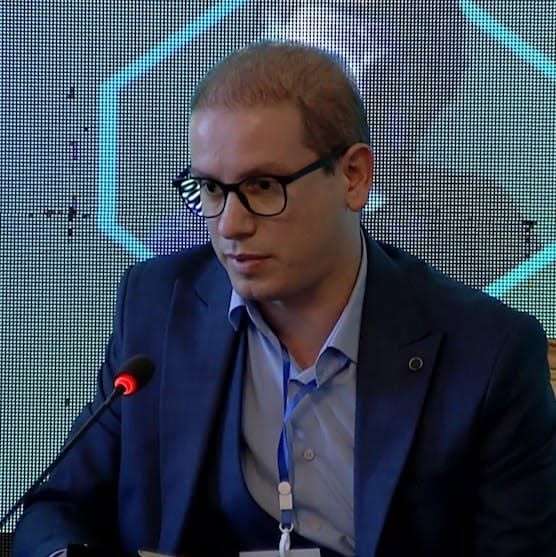
BIIP talks to Dr. Gurakuç Kuçi on hybrid threats, Kosovo, and regional security. Dr. Kuçi is Professor at Universum College and External Associate at the Institute for Hybrid Warfare Studies “OCTOPUS”.
1. Could you briefly introduce your work and how you came to focus on hybrid threats in the Western Balkans?
My orientation toward the study of hybrid warfare did not arise from an academic exercise, but as an urgent need to fill a doctrinal gap in Kosovo’s defence. Classical security concepts that anticipate aggression only through tanks at the border are outdated. Kosovo faces every day an asymmetric war in which disinformation, cyberattacks, lawfare (the use of law as a weapon), Serbia’s misuse of the Serb minority, and the instrumentalization of organized crime serve as tools for undermining our sovereignty.
In my work at Universum College and the “OCTOPUS” Institute, I have applied the transdisciplinary methodology because the aggressor does not operate in separate sectors. A disinformation campaign prepares the ground for barricades, the barricades are financed by organized crime, while Belgrade’s diplomacy uses this tension to seek political concessions. My goal is to dismantle this interconnected architecture of aggression through strategic analysis and to offer our institutions not merely a reading of events, but a preventive doctrine.
2. Both Albanians and Bulgarians have historically lived under the shadow of larger Serbian and Russian hegemonic projects. How much do you think this shapes a common strategic outlook between Sofia and Pristina/Tirana?
History gives us awareness, but real geopolitics requires pragmatism. It is true that both Albanians and Bulgarians have experienced the consequences of Serbian and Russian hegemonic expansionism. However, relying only on “shared historical suffering” is a strategic mistake.
Bulgaria is a member of NATO and the EU, but at the same time remains one of the principal battlegrounds of Russian energy and informational influence in the region. The common interest among Sofia, Pristina, and Tirana is not built on nostalgia, but on concrete security interests: blocking Russian/Serbian penetration into critical infrastructure, protecting trade and military routes (such as Corridor VIII), and preventing Belgrade and Moscow from using the veto-blocking veto over regional integration. Cooperation should not remain at the level of declarations, but should be transformed into operational intelligence sharing and diplomatic synchronization.
3. How would you define the core of Serbia’s hybrid warfare strategy toward Kosovo, and which instruments – disinformation, parallel structures, economic pressure – do you consider most dangerous today?
Serbia’s strategy toward Kosovo is based on the doctrine of creating and maintaining a state of crisis. Belgrade aims continuously to create a global mindset against Kosovo by exploiting the Serbs and presenting that ethnic cleansing, violations of human rights, infringement of religious freedoms, and such things are taking place, which create psychological terror.
Through this propaganda and disinformation, to legitimize its terrorist attacks against Kosovo, the partition of Kosovo, and to find support and legitimization for its actions within the international community.
It continuously produces artificial crises, which it activates through the propaganda machine in order to victimize the Serb population; it also uses illegal networks and organized crime to challenge the order. In the end, it presents itself before the international community both as a victim and as the solver of the problem, and this solution is a return to the status quo, namely to the situation in which it does not allow Kosovo to extend the rule of law.
Kosovo’s defense against this model can no longer be passive. Kosovo must raise the cost for Belgrade for every crisis produced, by preventing it from using illegal instruments on the ground.
4. To what extent is Serbia an independent actor versus a conduit for Russian influence in Kosovo and the wider region?
It is a mistake to see Serbia as a passive puppet of Moscow, just as it is a mistake to treat it as a misunderstood European partner. Serbia is a revisionist actor with an original agenda of its own (“Serbian World”), which uses Russia’s power as a strategic multiplier.
Russia and Serbia have a symptomatic transactional partnership: Moscow seeks to keep the Balkans as a second open front against NATO in order to distract the West from Ukraine; Belgrade uses the Russian veto at the UN and Russian media infrastructure to obstruct the consolidation of Kosovo’s statehood. The fact that Serbia’s alignment with EU foreign policy remains minimal and that media such as RT Balkan are broadcast through Serbian state platforms proves that Belgrade has made strategic choices. Serbia is a willing conduit of Russian influence, because that influence serves its regional objectives with precision.
Therefore, the entire strategy is for Serbia to appear as a “neutral” actor, because this enables Russia to have a legal gateway for espionage and sabotage in the Western geopolitical sphere.
5. You have written about the position of Albanians in North Macedonia. How would you characterize their situation today, and are they a target of the same hybrid strategies you identify elsewhere in the region?
Albanians in North Macedonia are not merely an ethnic minority; they are a state-forming element. However, their position today faces a subtle risk: the gradual administrative degradation of the rights acquired through the Ohrid Agreement.
The hybrid strategy applied against them does not use barricades as in northern Kosovo, but uses ethnic polarization, the legal reinterpretation of the status of the language, and the neglect of the institutions of equality. This is accompanied by the effort to fragment the Albanian political factor.
This is part of what I call the “psychopolitical encirclement of the Albanian space”: the aim of pro-Russian and Serbian actors is to create the impression that Albanians in Kosovo, Albania, and North Macedonia do not have common strategic interests and that they can be defeated or de-factorized separately. The response to this is not folklorism, but strict reliance on NATO and EU standards for constitutional equality, accompanied by an approach that creates a common geopolitical mindset.
6. Bulgaria and Kosovo face parallel challenges with Russian influence and democratic resilience. Where do you see the most useful potential for cooperation between our countries and think-tank communities?
We must always begin with what is most suitable, and that is intellectual observation. Therefore, if intellectual capacities and analyses find space for communication, then a path has been laid that then studies and analyses the modalities for resolving the common problems of security and democratic resilience, since these are the first steps that also overcome the xenophobia of distance.
Then, without delay, we must move to mechanisms with operational impact. The four areas in which cooperation brings real resilience are: interconnected analysis of disinformation campaigns, and here Bulgarian researchers know the matrix of Russian intelligence, while Kosovo knows operationally how this matrix is adapted into the languages of the Balkans through Belgrade. The second is monitoring financial sources, bot networks, and various channels used for regional destabilization. The third is the protection of electoral processes and cyber infrastructure, and the fourth is the creation of a permanent Kosovo-Bulgaria observatory against hybrid warfare.
7. What do you think Bulgaria could learn from Kosovo’s experience in countering hybrid interference – and, conversely, what could Kosovo learn from Bulgaria’s experience? How can we better work together?
Bulgaria should understand from Kosovo that Kosovo’s experience with hybrid warfare is not only fake news on social networks. Kosovo has proven that disinformation narratives are military preparatory phases used to justify the violence of proxy groups, road blockades, and the challenging of sovereignty. Bulgaria must develop a more aggressive early-warning culture.
Meanwhile, Kosovo should learn from Bulgaria how the fight against hybrid interference is institutionalized within NATO and EU mechanisms, including the use of financial sanctions, the detection of diplomatic espionage networks, and the protection of the energy sector.
Both countries have one weakness, which is the fragmented response. A cyberattack is treated as a technical problem, while a media campaign is treated as a journalism problem. Effectiveness requires an integrated state approach.
8. Looking ahead five years, are you more optimistic or pessimistic about the ability of the Albanian nation – in Kosovo, Albania, and North Macedonia – to withstand hybrid pressure, and what single change would most improve its position?
Optimism must be based on capacities and not on hope. Albanians today have geopolitical advantages as never before (the membership of Albania and North Macedonia in NATO, the presence of KFOR, and the development of Kosovo’s army). But our main weakness remains strategic fragmentation. Hybrid actors view the Albanian space as an operationally distributed system and strike the weakest points, while Albanian political elites react separately according to administrative borders.
The only strategic change that must be made is the creation of a Permanent Council for Strategic Coordination and National Security (Kosovo–Albania–the Albanian Factor in NM), with the participation of security experts and the diaspora.
This mechanism is not a political or supranational project, but a Euro-Atlantic platform for security synchronization that provides joint threat assessments, a common doctrine for cyber defence, unified strategic communication especially during crises, and coordinated combating of lawfare and disinformation.
If we do not build this common capacity within 5 years or sooner, we will remain behind the mobilization that NATO is undertaking and behind the requirements posed by the global threats of the coming years.
Questions asked by Dr. Dimitar Keranov
